Peace of Mind Blog: Building Your Digital Sanctuary

Creating a peace of mind blog represents more than just publishing content. It becomes a digital sanctuary where readers discover practical strategies for navigating life's overwhelming moments. A dedicated space for calm transforms how people approach their mental well-being, offering them tools, insights, and gentle reminders that inner peace is achievable through consistent, mindful practices. In today's hyperconnected world, a peace of mind blog serves as an anchor point where readers can return daily to reset, refocus, and reconnect with what matters most.
Why Peace of Mind Content Matters in 2026
The demand for mental wellness resources has never been higher. Between workplace pressures, digital overwhelm, and constant connectivity, people actively search for reliable sources that help them find balance. A peace of mind blog addresses this growing need by providing accessible, actionable content that readers can implement immediately.
The Growing Mental Wellness Movement
Mental health awareness has shifted from stigma to celebration. Organizations like the National Alliance on Mental Illness have worked tirelessly to normalize conversations about mental well-being, creating pathways for people to understand their own capacity for growth and change.
This cultural shift creates opportunities for content creators who understand the nuances of mental wellness. Readers no longer want generic advice. They seek specific, tested strategies that fit into their actual lives.
Key reader expectations include:
- Evidence-based practices they can trust
- Quick-win strategies for immediate relief
- Long-term approaches for sustained growth
- Authentic voices sharing real experiences
- Resources that respect their time and intelligence

Building Your Peace of Mind Blog Foundation
Creating impactful content requires more than good intentions. A successful peace of mind blog operates on clear structural principles that guide both content creation and reader experience.
Core Content Pillars
Every peace of mind blog benefits from establishing distinct content categories. These pillars help readers navigate your offerings while ensuring you cover the full spectrum of mental wellness needs.
| Content Pillar | Purpose | Example Topics |
|---|---|---|
| Quick Resets | Immediate relief techniques | 5-minute breathing exercises, grounding methods |
| Daily Routines | Sustainable practices | Morning rituals, evening wind-downs, midday breaks |
| Deep Dives | Educational content | Understanding anxiety triggers, brain science, habit formation |
| Practical Tools | Downloadable resources | Journals, trackers, guided scripts |
This framework ensures your peace of mind blog delivers value at multiple levels. Some readers arrive in crisis, needing immediate support. Others come ready to build long-term systems. Your content architecture should serve both needs.
Authentic Voice Development
Readers connect with vulnerability and authenticity. The most effective peace of mind blog writers share their own journeys without turning every post into a memoir. They balance personal insight with practical application, creating content that feels both relatable and useful.
Consider how you approach topics like anxiety relief. Generic advice falls flat. Specific examples resonate. Instead of "practice deep breathing," try "when I feel my chest tighten during afternoon meetings, I excuse myself for two minutes and practice 4-7-8 breathing in the hallway."
Content Strategies That Create Calm
The mechanics of peace of mind blog writing differ from other content types. Your goal extends beyond pageviews and engagement metrics. You're creating genuine refuge for people who need it.
Writing That Soothes and Empowers
Effective calm-focused content balances validation with agency. Readers need to feel understood without feeling stuck. Your writing should acknowledge their struggles while consistently pointing toward actionable solutions.
Effective content techniques include:
- Start with recognition - Acknowledge the reader's current state without judgment
- Build understanding - Explain why they might feel this way using accessible science
- Offer clear steps - Provide specific, numbered actions they can take immediately
- Create permission - Remind readers that progress isn't linear and rest matters
- End with encouragement - Close with gentle reinforcement of their capability
This structure appears throughout research-backed approaches to peace of mind that emphasize both understanding and action. Readers appreciate knowing the "why" behind recommendations, but they ultimately need the "how."
Balancing Education and Action
A peace of mind blog walks a delicate line between teaching and doing. Too much theory overwhelms. Too many tips without context creates confusion. The sweet spot combines just enough background information to build understanding with immediately applicable practices.
For instance, when discussing stress management techniques, you might dedicate one paragraph to explaining the physiological stress response, then transition into three specific techniques readers can try within the next hour.

Creating Consistent Publishing Rhythms
Regularity matters tremendously for a peace of mind blog. Readers return to sources they trust, and consistency builds that trust. When people know they can visit your site every morning or every Monday and find fresh, helpful content, your blog becomes part of their wellness routine.
Editorial Calendar Design
Strategic planning prevents burnout while ensuring comprehensive coverage. Your editorial calendar should reflect seasonal patterns, current events, and evergreen needs.
Quarterly planning approach:
- 40% evergreen content (anxiety techniques, sleep hygiene, boundary setting)
- 30% seasonal content (holiday stress, summer routines, back-to-school transitions)
- 20% trending topics (new research, cultural conversations, current challenges)
- 10% experimental content (testing new formats, exploring adjacent topics)
This mix keeps your peace of mind blog relevant and fresh while maintaining a reliable core offering. Readers appreciate both familiarity and novelty in appropriate measures.
Batch Creation for Sustainable Output
Maintaining quality while publishing regularly requires systematic approaches. Many successful peace of mind blog creators batch their content creation, dedicating specific days to research, writing, editing, and scheduling.
A typical monthly cycle might include:
- Week 1: Research and outline four posts, gather supporting materials
- Week 2: Write first drafts of all four posts
- Week 3: Edit, refine, and add multimedia elements
- Week 4: Schedule posts, create supporting social content, engage with readers
This rhythm prevents the stress of constant creation while ensuring you always have content ready. Ironically, building systems around your peace of mind blog helps maintain your own peace of mind.
Integrating Practical Resources
Written content forms the foundation, but downloadable resources multiply your blog's value. Readers appreciate tangible tools they can use beyond the screen. My Calm Reset demonstrates this approach effectively by combining calming blogs with downloadable guides that readers can reference repeatedly, creating a comprehensive ecosystem of support.

Types of High-Value Downloads
Your peace of mind blog becomes stickier when you offer resources readers save and revisit. These materials extend your impact beyond the initial reading experience.
| Resource Type | Use Case | Examples |
|---|---|---|
| Printable Trackers | Daily monitoring | Mood logs, habit trackers, gratitude journals |
| Guided Scripts | Direct practice | Meditation scripts, journaling prompts, affirmation lists |
| Worksheets | Deep work | Values clarification, trigger identification, goal setting |
| Quick Reference Cards | On-demand support | Breathing techniques, grounding methods, coping statements |
Creating these resources doesn't require graphic design expertise. Simple, functional tools often perform better than overly designed materials. Readers value clarity and usability above aesthetics.
Building Community Through Comments and Engagement
A peace of mind blog thrives on reciprocal relationships. While you provide content and guidance, readers offer valuable insights through their questions, experiences, and feedback. This exchange enriches your understanding and strengthens your community.
Fostering Safe Discussion Spaces
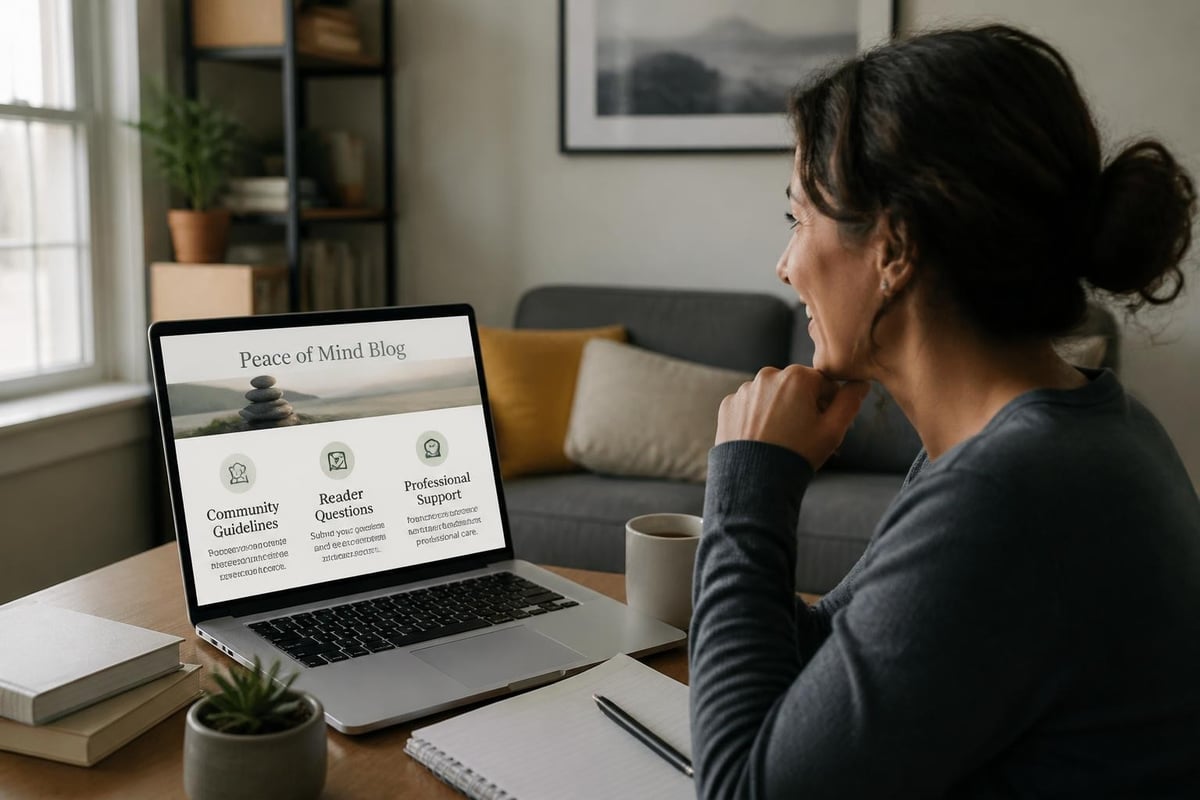
Mental wellness topics require careful moderation. Your comment section should feel safe, supportive, and constructive. Establishing clear community guidelines helps maintain this environment.
Community standards might include:
- Respectful disagreement without personal attacks
- Sharing experiences without offering medical advice
- Supporting others while honoring boundaries
- Acknowledging that different approaches work for different people
- Protecting privacy by avoiding oversharing personal details
These guidelines preserve your peace of mind blog as a refuge rather than a source of additional stress. Regular moderation ensures conversations remain constructive and aligned with your mission.
Responding to Reader Challenges
You'll inevitably encounter readers in crisis. While your peace of mind blog provides support, it cannot replace professional mental health care. Clearly stating this boundary protects both you and your readers.
Include a resources section linking to crisis hotlines, therapy directories, and emergency services. When readers share serious struggles in comments, respond with compassion while directing them toward appropriate professional support. This approach honors your role as a supportive resource without exceeding your scope.
Measuring Success Beyond Traffic Metrics
Traditional blog metrics tell part of the story. A peace of mind blog requires additional success indicators that reflect your true mission. Yes, pageviews and time-on-page matter, but deeper engagement metrics reveal whether you're genuinely helping people.
Meaningful Analytics to Track
Beyond standard metrics, consider tracking:
- Return visitor rate - Are people coming back regularly?
- Download engagement - How many readers use your practical tools?
- Comment quality - Are readers sharing thoughtful reflections and questions?
- Email list growth - Do readers want ongoing connection?
- Shares and saves - Are people bookmarking content for later?
These indicators suggest your peace of mind blog delivers lasting value. A reader who downloads your morning routine guide and returns weekly demonstrates different engagement than someone who lands once and leaves.
Reader Feedback Systems
Create structured opportunities for feedback beyond comment sections. Quarterly surveys, feedback forms on downloads, and occasional reader interviews provide invaluable insights into what's working and what needs adjustment.
Useful survey questions include:
- Which topics have been most helpful in your daily life?
- What challenges are you facing that we haven't addressed?
- How has this content changed your approach to stress or anxiety?
- What formats do you prefer (long-form articles, quick tips, video, audio)?
This information guides your peace of mind blog evolution, ensuring you remain responsive to actual reader needs rather than assumptions about what might help.
Sustainable Practices for Content Creators
Running a peace of mind blog while maintaining your own well-being requires intentional boundaries. You cannot pour from an empty cup, and burnout serves neither you nor your readers.
Protecting Your Energy
Set clear limits around:
- Publishing frequency - Choose a sustainable schedule you can maintain long-term
- Comment responses - Decide which comments receive replies and when
- Reader requests - Establish what you will and won't cover
- Content topics - Know your scope and stay within it
- Work hours - Maintain boundaries between creation time and rest time
Explore resources about setting digital boundaries to protect your own mental space while serving others. Understanding that rest is a skill worth developing helps you model the behaviors you recommend to readers.
Continuing Education and Growth
The mental wellness field evolves constantly. New research emerges, cultural understanding deepens, and best practices shift. A credible peace of mind blog stays current without chasing every trend.
Dedicate time monthly to reading new research, exploring science-backed approaches to inner peace, and considering how emerging insights apply to your audience. This ongoing learning ensures your content remains accurate and helpful.
Expanding Your Peace of Mind Blog Impact
As your blog grows, opportunities emerge to deepen your impact. Strategic expansion allows you to serve readers in new ways while maintaining your core mission.
Format Diversification
Written content remains central, but additional formats reach different learning styles and situations. Consider adding:
- Audio content - Guided meditations, podcast episodes discussing blog topics
- Video resources - Technique demonstrations, talking-head explanations
- Email sequences - Structured courses delivered over days or weeks
- Live elements - Q&A sessions, group practices, community calls
Each format serves distinct needs. Someone dealing with a racing mind at 2 AM might prefer audio guidance over reading. A visual learner might benefit from watching breathing technique demonstrations.
Collaboration and Guest Contributions
Partnering with other mental wellness voices expands your peace of mind blog perspective. Guest contributors bring fresh insights and new audiences. Interviews with therapists, researchers, or people with relevant lived experience add depth and credibility.
When collaborating, maintain editorial control to ensure content aligns with your values and quality standards. Not every potential partnership serves your readers, even if it might boost traffic.
Addressing Common Peace of Mind Blog Challenges
Even well-established blogs encounter obstacles. Anticipating common challenges helps you navigate them effectively.
Content Repetition Concerns
Mental wellness core principles don't change dramatically. You might worry about repeating yourself or running out of topics. The solution lies in approaching familiar concepts from new angles.
Refresh strategies include:
- Applying general principles to specific situations (anxiety at work vs. social anxiety)
- Updating older posts with new research or refined approaches
- Creating seasonal variations of evergreen topics
- Addressing reader questions that reveal new perspectives
- Connecting multiple concepts in integrated frameworks
Your peace of mind blog can discuss breathing exercises dozens of times if each iteration serves a distinct need or offers fresh insight. The fundamentals bear repeating because readers need multiple exposures to internalize practices.
Balancing Optimization and Authenticity
SEO matters for discoverability, but optimizing shouldn't compromise your voice or mission. Finding resources through your blog should feel natural, not forced. Keywords matter, but reader experience matters more.
Write first for humans, then optimize for search. Your peace of mind blog succeeds when readers find value, stay engaged, and return regularly. These behaviors ultimately signal quality to search engines anyway.
Managing Scope and Expertise Boundaries
You'll encounter questions beyond your knowledge or scope. Handling these moments gracefully maintains credibility. Acknowledge limitations honestly. Point readers toward appropriate resources. Recognize that "I don't know" demonstrates integrity.
Articles covering various paths to peace of mind remind us that multiple approaches exist, and no single source provides complete answers. Your peace of mind blog offers valuable perspective without claiming to be everything to everyone.
Seasonal Content Opportunities
Aligning content with calendar events and seasonal patterns keeps your peace of mind blog relevant and timely. Readers face different challenges throughout the year, and addressing these shifts demonstrates understanding.
Annual Content Themes
| Season | Common Challenges | Content Opportunities |
|---|---|---|
| January-March | New year pressure, winter blues | Sustainable goal-setting, managing expectations, indoor coping strategies |
| April-June | Spring transitions, end-of-school stress | Embracing change, family dynamics, outdoor practices |
| July-September | Vacation overwhelm, back-to-routine anxiety | Travel stress management, schedule transitions, preparation techniques |
| October-December | Holiday stress, year-end pressure | Boundary setting, family gatherings, reflection practices |
Planning seasonal content months ahead allows thorough research and thoughtful creation. Your peace of mind blog becomes a trusted companion through life's annual rhythms.
Evergreen Content Strategy
While seasonal posts serve immediate needs, evergreen content provides lasting value. Posts about fundamental practices like daily mindfulness or calming techniques remain relevant year-round, continuously attracting new readers and serving as reference materials for returning visitors.
Balance your editorial calendar with approximately 60% evergreen content and 40% timely pieces. This mix ensures consistent traffic while allowing responsive, relevant publishing.
The Long-Term Vision for Your Peace of Mind Blog
Building a truly helpful resource takes time. Your peace of mind blog won't transform overnight into a comprehensive library, and that's perfectly acceptable. Sustainable growth matters more than rapid expansion.
Year-One Milestones
Realistic first-year goals might include:
- Publishing 50-100 quality posts covering core mental wellness topics
- Building an email list of engaged readers
- Creating 10-15 downloadable resources
- Establishing consistent publishing rhythm
- Developing clear editorial voice and approach
- Connecting with 3-5 complementary creators or organizations
These achievements create a solid foundation for continued growth. Your peace of mind blog becomes a reliable resource readers trust and recommend.
Sustainable Growth Patterns
Year two and beyond focus on deepening rather than just expanding. Improve existing content with new insights. Create more sophisticated resources. Develop signature frameworks or approaches. Build stronger community connections.
Organizations like the Peace of Mind Partnership demonstrate how focused mental wellness resources create lasting impact by staying true to mission while evolving thoughtfully. Your peace of mind blog can similarly grow in influence without losing its essential character.
Technical Considerations for Optimal Experience
While content quality matters most, technical elements affect whether readers can access and engage with your peace of mind blog effectively.
Site Performance and Accessibility
Fast loading times prevent frustration. Clear navigation helps readers find what they need. Accessible design ensures everyone can benefit from your content, regardless of ability. Mobile optimization matters tremendously since many people seek calm-focused content during stressful moments away from their desks.
These technical foundations support your content mission. The best article in the world doesn't help if readers abandon your site before it loads.
Content Organization Systems
As your peace of mind blog grows, organization becomes critical. Readers should easily find relevant content whether they search for specific topics or browse categories. Consider implementing:
- Topic-based categories (Anxiety, Sleep, Relationships, Work Stress)
- Format-based filtering (Articles, Downloads, Audio, Quick Tips)
- Experience-level options (Getting Started, Building Habits, Advanced Practice)
- Robust search functionality with clear results
Good organization multiplies your content's value by helping readers discover exactly what they need when they need it. Your comprehensive guide section might house in-depth resources while quick blog posts serve immediate needs.
Building a peace of mind blog creates genuine value in a world desperate for calm. When you combine authentic understanding with practical strategies, consistent publishing with sustainable practices, and quality content with accessible delivery, you establish a resource that genuinely improves lives. Whether you're just beginning or refining an established presence, the path forward involves staying true to your mission of providing refuge, guidance, and support for people seeking balance in daily life. My Calm Reset offers the perfect starting point for your own journey toward creating calm, with blogs, routines, and downloadable resources designed to help you feel more grounded and at peace every single day.
Get the free Mini Reset
A short sample of the 7-day guide — a gentle practice you can try today. Enter your email and the download link appears instantly.
Free. No spam. Unsubscribe anytime.
Want more calm in your life?
The Calm Reset guide is a 48-page digital book of rituals, prompts, and practices for a calmer life.
Get the Guide