
How to Feel Grounded: 12 Proven Techniques for Daily Balance

In a world that constantly demands our attention, learning how to feel grounded has become essential for maintaining mental and emotional balance. Feeling grounded means being fully present in your body and mind, connected to the current moment rather than swept away by worries about the future or regrets about the past. This centered state allows you to navigate daily challenges with clarity, make thoughtful decisions, and respond to stress with resilience rather than reactivity.
Understanding What It Means to Feel Grounded
Grounding refers to the practice of reconnecting with the present moment and your physical body. When you're grounded, you experience a sense of stability, calm awareness, and emotional regulation even during turbulent times.
The opposite of feeling grounded is experiencing disconnection, anxiety, or feeling "scattered." You might notice racing thoughts, difficulty concentrating, or a sense that you're watching life happen rather than participating in it. These sensations often arise during periods of high stress, significant life changes, or when you've been operating on autopilot for too long.
The Science Behind Grounding
Research in psychology and neuroscience supports the benefits of grounding practices. These techniques activate the parasympathetic nervous system, which counteracts the stress response and promotes relaxation. When you engage in grounding activities, you're literally changing your brain chemistry and physiological state.
Key physiological benefits include:
- Reduced cortisol levels (the primary stress hormone)
- Lower heart rate and blood pressure
- Improved vagal tone, which enhances emotional regulation
- Decreased inflammation markers in the body
- Enhanced focus and cognitive function
Studies have shown that regular grounding practices can significantly improve symptoms of anxiety and depression while boosting overall well-being.

Physical Grounding Techniques for Immediate Relief
Physical grounding techniques work by redirecting your attention to bodily sensations, effectively pulling you out of mental spirals and into present-moment awareness. These methods are particularly effective when you notice anxiety building or feel overwhelmed.
The 5-4-3-2-1 Sensory Method
This popular technique engages all five senses to anchor you in the present:
- Identify 5 things you can see - Notice details like colors, shapes, and textures around you
- Acknowledge 4 things you can touch - Feel the texture of your clothing, the surface beneath your feet, or an object in your hand
- Recognize 3 things you can hear - Listen for background sounds, nearby conversations, or nature sounds
- Notice 2 things you can smell - Detect scents in your environment or use essential oils
- Name 1 thing you can taste - Focus on the taste in your mouth or have a piece of gum or mint
This method provides structure when you need to know how to feel grounded quickly during moments of acute stress or disconnection.
Barefoot Earth Contact
Walking barefoot on natural surfaces like grass, sand, or soil creates a direct physical connection with the earth. This practice, sometimes called "earthing," has been associated with reduced inflammation and improved sleep quality.
Spend at least 10-15 minutes barefoot outdoors whenever possible. Notice the temperature, texture, and sensation beneath your feet. This simple act can significantly enhance your sense of groundedness.
| Grounding Technique | Time Required | Best Used For | Difficulty Level |
|---|---|---|---|
| 5-4-3-2-1 Method | 3-5 minutes | Acute anxiety | Beginner |
| Barefoot walking | 10-15 minutes | Daily practice | Beginner |
| Body scan meditation | 10-20 minutes | Deep relaxation | Intermediate |
| Cold water exposure | 1-3 minutes | Energy reset | Intermediate |
| Progressive muscle relaxation | 15-20 minutes | Physical tension | Beginner |
Breathwork Practices That Create Stability
Your breath serves as a powerful bridge between your conscious and unconscious nervous system. Intentional breathing patterns directly influence your emotional state and can help you feel grounded within minutes.
Box Breathing Technique
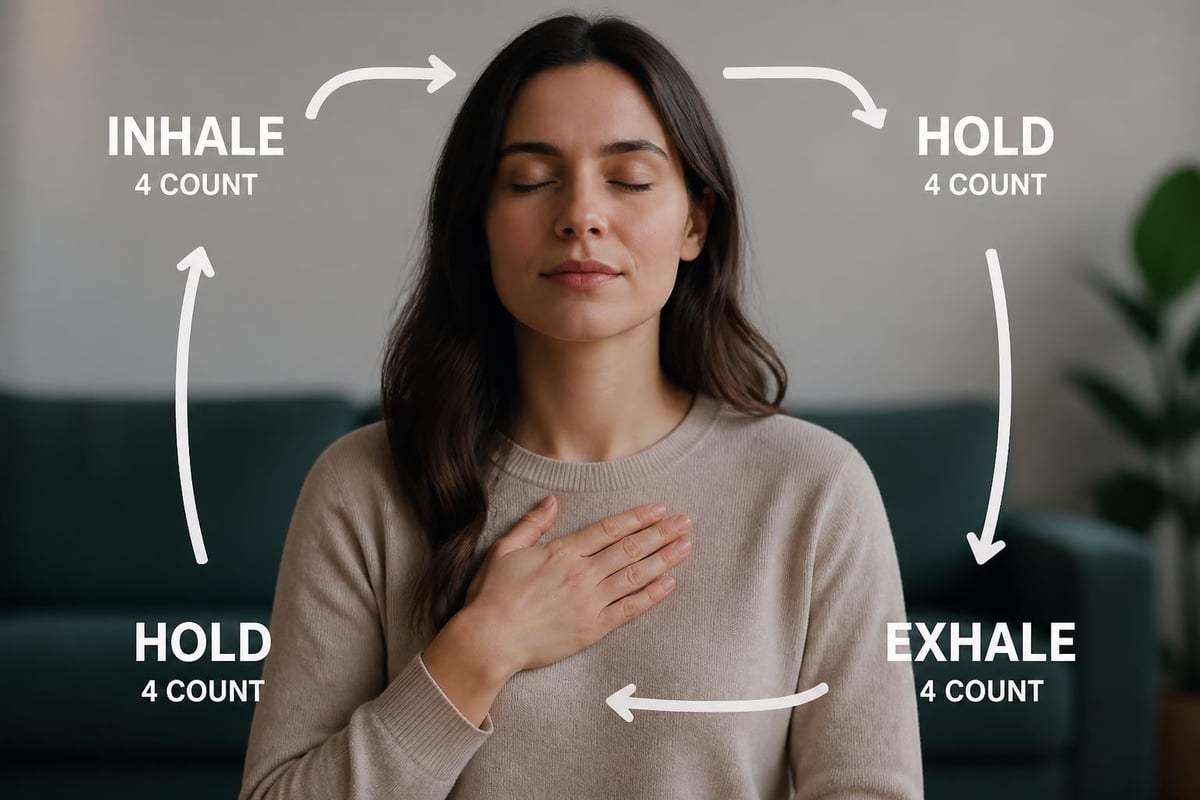
Box breathing creates a rhythmic pattern that calms the mind and regulates the nervous system:
- Inhale slowly through your nose for 4 counts
- Hold your breath for 4 counts
- Exhale completely through your mouth for 4 counts
- Hold empty for 4 counts
- Repeat for 5-10 cycles
This technique is used by athletes, military personnel, and first responders to maintain composure under pressure. The structured pattern gives your mind something to focus on while simultaneously activating your relaxation response.
Diaphragmatic Breathing
Also known as belly breathing, this technique ensures you're breathing deeply rather than taking shallow chest breaths. Place one hand on your chest and another on your belly. As you inhale, your belly should expand while your chest remains relatively still.
Practice this for 5-10 minutes daily to retrain your breathing patterns. Over time, diaphragmatic breathing becomes more natural, providing ongoing support for how to feel grounded throughout your day.
Creating Daily Routines That Support Groundedness
Consistent routines provide structure and predictability, which are foundational elements for feeling grounded. When you establish simple calming routines, you create anchors throughout your day that return you to center.
Morning Grounding Ritual
Starting your day with intention sets the tone for groundedness:
- Wake at a consistent time (even on weekends)
- Avoid checking your phone for the first 30 minutes
- Drink a full glass of water
- Spend 5-10 minutes in meditation or gentle stretching
- Eat a nourishing breakfast mindfully
A calm morning routine prevents you from starting the day in reactive mode, which often leads to feeling scattered and overwhelmed.
Midday Reset Practices
Quick grounding activities for busy schedules:
- Take a 10-minute walk outside without your phone
- Practice three minutes of conscious breathing at your desk
- Eat lunch away from screens, focusing on flavors and textures
- Do five minutes of gentle stretching to release physical tension
- Listen to a guided meditation or calming music
These brief interventions help you maintain groundedness even during hectic workdays. The key is consistency rather than duration.
Evening Wind-Down Sequence
Creating a transition between your active day and restful evening helps you feel grounded before sleep. Dim lights an hour before bed, engage in quiet activities like reading or journaling, and practice gratitude by noting three positive moments from your day.
For those dealing with anxiety relief tips, evening routines become particularly important for processing the day and preventing nighttime worry spirals.
Mindfulness and Present-Moment Awareness
Mindfulness is perhaps the most comprehensive approach to how to feel grounded because it trains your attention to remain in the present rather than drifting into past regrets or future anxieties.
Body Scan Meditation
This practice systematically brings awareness to each part of your body, noticing sensations without judgment. Start at your toes and slowly move your attention upward through your legs, torso, arms, and head.
Body scans help you identify where you're holding tension and reconnect with physical sensations that anchor you in the present moment. Practice for 10-20 minutes daily, preferably lying down in a comfortable position.
Mindful Movement Practices
Activities like yoga, tai chi, or qigong combine physical movement with focused awareness, creating powerful grounding experiences. These practices emphasize the connection between breath, body, and mind.
You don't need formal classes to benefit from mindful movement. Simply walking slowly while paying full attention to each step, the shift of your weight, and the sensation of movement can be profoundly grounding.
Environmental Factors That Enhance Grounding
Your physical environment significantly impacts your ability to feel grounded. Creating spaces that support calm and presence makes grounding practices more effective and sustainable.
Decluttering for Mental Clarity
Physical clutter often mirrors and contributes to mental clutter. Organize your living and working spaces to include only items that serve a purpose or bring you joy. Clear surfaces, organized storage, and clean spaces reduce visual overwhelm and make it easier to focus.
Environmental elements that support groundedness:
- Natural light or full-spectrum lighting
- Plants and natural materials
- Calming colors (blues, greens, earth tones)
- Minimal visual clutter
- Designated spaces for specific activities
- Comfortable temperature and air quality
Nature Connection
Regular time in natural settings provides some of the most powerful grounding experiences available. Natural environments reduce mental fatigue, lower stress hormones, and restore attention capacity.
Aim for at least 20 minutes in nature three times weekly. This could include parks, forests, beaches, or even tree-lined streets. If outdoor access is limited, bring nature indoors with plants, nature sounds, or nature photography.

Social and Emotional Grounding Strategies
Human connection and emotional awareness play crucial roles in how to feel grounded. Isolation and suppressed emotions often contribute to feeling unmoored and disconnected.
Authentic Communication
Sharing your thoughts and feelings with trusted individuals creates a sense of being seen and understood. This validation helps you feel more real and present in your own experience.
Practice expressing yourself honestly rather than defaulting to "I'm fine" when you're not. Vulnerability, while uncomfortable, deepens connections and helps you stay grounded in your authentic experience.
Boundary Setting for Protection
Clear boundaries protect your energy and prevent the overwhelm that comes from taking on too much. Learning to say no, limiting exposure to draining relationships, and establishing digital boundaries all contribute to sustained groundedness.
Boundaries aren't selfish-they're essential for maintaining the stability that allows you to show up fully for yourself and others.
| Social Grounding Practice | Benefits | Implementation |
|---|---|---|
| Regular check-ins with trusted friends | Emotional validation, perspective | Weekly phone calls or coffee dates |
| Journaling emotions | Self-awareness, processing | 10 minutes daily writing |
| Limiting social media | Reduced comparison, present focus | Scheduled blocks only |
| Saying no to obligations | Energy preservation | Pause before committing |
| Seeking support when needed | Professional guidance | Therapy or coaching |
Mental and Cognitive Approaches
Your thought patterns significantly influence your sense of groundedness. Recognizing and redirecting unhelpful thinking creates mental stability and present-moment focus.
Cognitive Reframing
When you notice catastrophic thinking or rumination, pause and examine the thought objectively. Ask yourself: Is this thought based on facts or assumptions? What evidence supports or contradicts it? What would I tell a friend having this thought?
This practice doesn't dismiss genuine concerns but prevents you from being swept away by worst-case scenarios that may never materialize.
Scheduled Worry Time
Rather than trying to eliminate worries (which often backfires), designate a specific 15-minute period each day for addressing concerns. When worries arise outside this time, acknowledge them and postpone detailed consideration until your scheduled worry session.
This technique helps you regain control over when and how you engage with anxious thoughts, preventing them from derailing your entire day.
Gratitude and Appreciation Practices
Focusing on what's working rather than what's wrong shifts your perspective and grounds you in positive reality. Keep a gratitude journal, noting three specific things you appreciate each day.
The practice of daily mindfulness naturally incorporates gratitude by training your attention to notice positive moments as they occur.
Long-Term Lifestyle Factors
Sustainable groundedness requires attention to fundamental aspects of health and well-being. Short-term grounding techniques work best when supported by healthy lifestyle foundations.
Sleep Quality and Consistency
Poor sleep undermines every other grounding practice. Prioritize 7-9 hours of quality sleep by maintaining consistent sleep and wake times, creating a dark and cool sleeping environment, and avoiding screens before bed.
Recognize that rest is a skill that requires practice and prioritization, not something that happens automatically.
Nutrition for Nervous System Support
What you eat directly affects your brain chemistry and emotional regulation. Focus on whole foods, adequate protein, healthy fats, and minimize processed foods, excess caffeine, and sugar.
Stay hydrated throughout the day, as even mild dehydration can affect mood and concentration. Aim for half your body weight in ounces of water daily.
Movement and Physical Activity
Regular exercise regulates stress hormones, improves mood, and enhances sleep quality. Find activities you genuinely enjoy rather than forcing yourself into exercise you dread.
Movement doesn't require intense workouts-walking, dancing, swimming, or gentle stretching all provide grounding benefits when practiced consistently.
Building Your Personal Grounding Toolkit
No single technique works for everyone or in every situation. Understanding how to feel grounded requires developing a personalized collection of practices you can draw upon as needed.
Steps for creating your toolkit:
- Experiment with various techniques from different categories
- Notice which practices resonate most strongly with you
- Identify which techniques work best for specific situations
- Practice your chosen methods regularly, not just in crisis
- Adjust and refine your toolkit as your needs change
At My Calm Reset, we've created downloadable guides to help you build and maintain practices that support daily balance and groundedness.
Keep your toolkit accessible by writing down your go-to practices, setting reminders on your phone, or keeping grounding objects (like a smooth stone or essential oil) readily available. The easier you make it to access these tools, the more likely you'll use them consistently.
Learning how to feel grounded is an ongoing practice rather than a destination. By incorporating physical techniques, breathwork, mindfulness, environmental awareness, and healthy lifestyle habits, you create a comprehensive foundation for stability and presence. Visit My Calm Reset to explore calming blogs, simple routines, and downloadable guides designed to help you feel more balanced, grounded, and at peace in everyday life.
Get the free Mini Reset
A short sample of the 7-day guide — a gentle practice you can try today. Enter your email and the download link appears instantly.
Free. No spam. Unsubscribe anytime.
Want more calm in your life?
The Calm Reset guide is a 48-page digital book of rituals, prompts, and practices for a calmer life.
Get the Guide