Sleep and Stress Relief: Evidence-Based Strategies

Modern life presents countless stressors that chip away at our well-being, and nowhere is this more evident than in the bedroom. When stress keeps your mind racing at night, sleep becomes elusive. When sleep deprivation accumulates, your capacity to handle stress plummets. This bidirectional relationship creates a cycle that millions experience daily. Understanding the connection between sleep and stress relief opens pathways to breaking this pattern and reclaiming the restorative rest your body and mind desperately need.
The Biological Connection Between Sleep and Stress
Your body's stress response system and sleep architecture are intimately connected through shared neural pathways and hormonal systems. When you encounter stress, your hypothalamic-pituitary-adrenal (HPA) axis activates, releasing cortisol and other stress hormones that prepare you for action. These same hormones directly interfere with the delicate balance of neurotransmitters needed for quality sleep.
Chronic stress keeps cortisol levels elevated well into evening hours when they should naturally decline. This disruption prevents the normal rise of melatonin, your primary sleep hormone, making it harder to fall asleep and stay asleep throughout the night. Research from Harvard Medical School demonstrates how sleep deprivation triggers inflammatory responses and metabolic changes that further amplify stress reactivity.

How Poor Sleep Amplifies Stress Perception
Sleep deprivation doesn't just make you tired. It fundamentally alters how your brain processes emotional information and perceives threats. Studies using functional MRI scanning show that sleep-deprived individuals exhibit 60% more amygdala reactivity to negative stimuli compared to well-rested counterparts.
Key ways insufficient sleep increases stress vulnerability:
- Impaired prefrontal cortex function reduces emotional regulation capacity
- Heightened amygdala responses magnify perception of threats
- Reduced cognitive flexibility limits problem-solving abilities
- Increased inflammatory markers sensitize stress pathways
- Depleted neurotransmitter reserves compromise mood stability
The American Psychological Association's annual stress survey consistently finds that adults who sleep fewer than eight hours per night report higher stress levels and greater difficulty managing daily demands. This creates a compounding effect where stress-induced sleep loss makes tomorrow's stressors feel even more overwhelming.
Evidence-Based Approaches to Sleep and Stress Relief
Breaking the cycle requires targeted interventions that address both sleep quality and stress management simultaneously. Fortunately, decades of research have identified highly effective, non-pharmaceutical strategies that work synergistically to restore balance.
Cognitive Behavioral Therapy for Insomnia (CBT-I)
CBT-I represents the gold standard treatment for chronic insomnia and stress-related sleep disturbances. This structured approach addresses the thought patterns, behaviors, and environmental factors that perpetuate poor sleep. The American Academy of Sleep Medicine recommends CBT-I as first-line treatment before considering medication.
| CBT-I Component | Purpose | Evidence Strength |
|---|---|---|
| Sleep restriction | Consolidate sleep drive | Strong |
| Stimulus control | Re-associate bed with sleep | Strong |
| Cognitive restructuring | Address anxiety about sleep | Moderate-Strong |
| Sleep hygiene | Optimize environment | Moderate |
| Relaxation training | Lower physiological arousal | Moderate-Strong |
Systematic reviews published in PubMed Central demonstrate that CBT-I produces lasting improvements in sleep onset latency, wake after sleep onset, and total sleep time. More importantly for sleep and stress relief, participants show significant reductions in anxiety and rumination even months after treatment completion.
The accessibility of CBT-I has expanded dramatically through digital platforms. Meta-analyses in npj Digital Medicine confirm that digital CBT-I delivers comparable benefits to in-person therapy, making evidence-based treatment available to anyone with internet access.
Mindfulness-Based Stress Reduction for Sleep
Mindfulness practices offer another powerful avenue for addressing sleep and stress relief simultaneously. These techniques train attention and awareness in ways that directly counteract the rumination and hyperarousal that disrupt sleep.
Core mindfulness practices for better sleep:
- Body scan meditation – Systematically releasing physical tension from head to toe
- Breath awareness – Anchoring attention to natural breathing rhythms
- Mindful observation – Noticing thoughts without engagement or judgment
- Loving-kindness meditation – Cultivating self-compassion around sleep difficulties
- Mindful movement – Gentle yoga or stretching to discharge nervous energy
Research published in PubMed Central shows that mindfulness-based stress reduction (MBSR) programs produce significant improvements in sleep quality, sleep efficiency, and daytime fatigue. Participants also report reduced stress reactivity and improved emotional well-being.
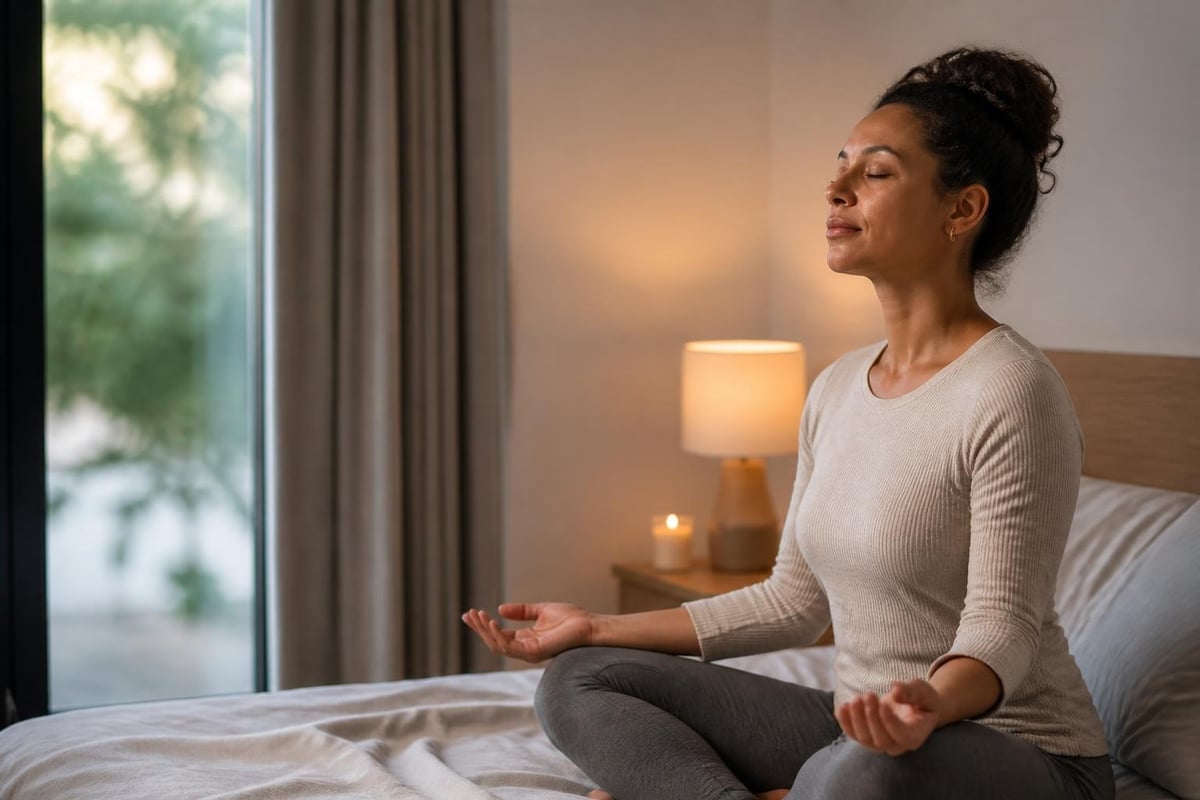
The beauty of mindfulness for sleep and stress relief lies in its dual mechanism. During practice sessions, you actively reduce current stress levels. Over time, you also build lasting resilience that makes future stressors less likely to disrupt your sleep.
Practical Sleep Hygiene Strategies
While CBT-I and mindfulness provide comprehensive frameworks, specific environmental and behavioral adjustments create the foundation for successful sleep and stress relief. These practical strategies work best when implemented consistently rather than sporadically.
Optimizing Your Sleep Environment
Your bedroom should function as a sleep sanctuary rather than a multipurpose space. Temperature, light, sound, and comfort all influence how easily you transition into sleep and how deeply you rest.
- Temperature control: Maintain bedroom temperature between 60-67°F (15-19°C)
- Light management: Use blackout curtains or eye masks to eliminate light exposure
- Sound reduction: Deploy white noise machines or earplugs to mask disruptive sounds
- Mattress and bedding: Invest in supportive, comfortable sleep surfaces
- Air quality: Ensure adequate ventilation and consider air purifiers for allergens
Many people underestimate how powerfully environment shapes sleep and stress relief. Even minor adjustments-removing the clock face from view, switching to softer bedding, or adding a small fan for air circulation-can yield noticeable improvements.
Timing and Routine Considerations
Your circadian rhythm thrives on consistency and predictability. Irregular sleep schedules confuse your internal clock and make it harder to achieve sleep and stress relief when you need it most.
Essential timing principles:
- Maintain the same wake time seven days per week (within 30 minutes)
- Establish a 30-60 minute wind-down routine before bed
- Stop caffeine intake at least eight hours before bedtime
- Finish eating 2-3 hours before sleep to prevent digestive interference
- Dim lights progressively in the evening to support melatonin production
- Transfer worries to paper through journaling earlier in the evening
Building an evening wind-down routine signals to your nervous system that it's time to shift from sympathetic (stress) to parasympathetic (rest) dominance. This transition period proves crucial for people whose stress typically follows them into bed.
Movement, Nutrition, and Sleep Quality
The relationship between daytime habits and nighttime rest extends far beyond obvious sleep hygiene rules. How you move your body and what you consume throughout the day directly influence your capacity for sleep and stress relief.
Exercise Timing and Intensity
Physical activity represents one of the most powerful interventions for both stress management and sleep quality. Regular exercise reduces baseline cortisol levels, increases adenosine (sleep pressure), and improves mood through endorphin release.
| Exercise Type | Best Timing | Sleep Benefit | Stress Benefit |
|---|---|---|---|
| Aerobic (moderate) | Morning/afternoon | Strong | Strong |
| Resistance training | Morning/afternoon | Moderate | Moderate-Strong |
| Gentle yoga | Evening | Strong | Strong |
| High-intensity interval | Morning/early afternoon | Moderate* | Strong |
| Walking | Anytime | Moderate | Moderate |
*High-intensity exercise within 2-3 hours of bed can interfere with sleep onset for some individuals
The key is finding sustainable movement practices that fit your schedule and preferences. Simple calming routines that incorporate gentle stretching or walking can be particularly effective when stress has already disrupted your sleep pattern.
Nutritional Considerations for Better Sleep
What you eat and drink influences neurotransmitter production, inflammation levels, and hormone balance-all factors in sleep and stress relief. While no single food serves as a sleep cure, strategic nutritional choices support the conditions for restorative rest.
Sleep-supporting nutrients and sources:
- Magnesium: Dark leafy greens, nuts, seeds, whole grains
- Tryptophan: Turkey, eggs, cheese, nuts, seeds
- Complex carbohydrates: Oats, quinoa, sweet potatoes
- Omega-3 fatty acids: Fatty fish, walnuts, flaxseeds
- Melatonin-rich foods: Tart cherries, tomatoes, walnuts
Equally important is what to avoid. Alcohol may seem to aid sleep onset but significantly disrupts sleep architecture and REM cycles. Late-day caffeine blocks adenosine receptors, preventing natural sleep pressure from building. Heavy, spicy, or acidic meals close to bedtime can trigger reflux that repeatedly wakes you.
For those struggling with sleep and stress relief, keeping a food and sleep diary for two weeks often reveals surprising patterns. You might discover that your 3 PM coffee habit correlates with difficulty falling asleep, or that skipping lunch leads to evening overeating that disrupts rest.
Implementing these evidence-based strategies for sleep and stress relief becomes much easier when you have structured guidance and support. My Calm Reset offers downloadable guides, calming routines, and daily resources specifically designed to help you build sustainable habits that protect both your sleep and your peace of mind.
Addressing Common Sleep and Stress Obstacles
Even with solid knowledge and good intentions, specific challenges can derail your progress toward better sleep and stress relief. Understanding how to navigate these common obstacles increases your likelihood of long-term success.
Racing Thoughts and Nighttime Rumination
Mental hyperactivity ranks among the most frequent complaints from people seeking sleep and stress relief. When you finally lie down, your mind suddenly replays every concern, conversation, and task that requires attention.
Clinical guidance from American Family Physician recommends several specific techniques for managing nighttime rumination. The "worry period" approach involves scheduling 15-20 minutes earlier in the evening to deliberately process concerns, write action items, and then consciously set them aside.
Cognitive techniques for racing thoughts:
- The 10-minute rule: If you can't sleep after 10 minutes, leave bed and do a calming activity
- Thought defusion: Label thoughts as "just thoughts" rather than urgent truths
- Mental imagery: Engage in detailed, pleasant visualization scenarios
- Progressive muscle relaxation: Systematically tense and release muscle groups
- Counting techniques: Use structured counting patterns to occupy attention
Additional strategies for managing a racing mind include keeping paper and pen beside your bed to quickly jot down intrusive thoughts, then return to sleep without fully waking. This externalizes concerns without reinforcing the association between bed and problem-solving.
Technology and Blue Light Exposure
Digital devices present a unique challenge to sleep and stress relief in 2026. The stimulating content keeps your mind engaged while blue wavelength light suppresses melatonin production. Yet completely disconnecting from technology feels unrealistic for most people.
Setting firm digital boundaries creates middle ground between total disconnection and unrestricted access. Many find success with progressive reduction: starting with device-free time one hour before bed, then gradually extending that window.
Technology management strategies:
- Enable blue light filters on all devices after sunset
- Use grayscale mode to reduce visual stimulation
- Remove charging cables from the bedroom entirely
- Set app limits that enforce boundaries automatically
- Replace scrolling with reading physical books or magazines
- Use separate alarm clocks instead of phone alarms
The goal isn't perfection but rather consistent reduction in evening stimulation. Even small changes in technology habits can yield meaningful improvements in sleep and stress relief over time.
Shift Work and Irregular Schedules
People working non-traditional hours face unique obstacles to sleep and stress relief. Your circadian rhythm evolved to align with natural light-dark cycles, making night shifts fundamentally challenging for sleep quality.
While you can't completely override biology, strategic interventions help minimize the sleep debt and stress accumulation that shift work creates. Bright light exposure during your "daytime" (even if that occurs at night) helps shift your circadian rhythm. Conversely, blackout curtains and eye masks during your "nighttime" sleep period support melatonin production despite daylight outside.
| Strategy | Implementation | Effectiveness |
|---|---|---|
| Light therapy | 10,000 lux exposure during wake period | High |
| Strategic caffeine | Only in first half of shift | Moderate-High |
| Napping | 20-minute naps before night shifts | Moderate |
| Meal timing | Align eating with work schedule | Moderate |
| Social support | Communicate sleep needs to household | Moderate-High |
Maintaining sleep and stress relief with irregular schedules requires extra intentionality around all the principles discussed-sleep hygiene, stress management practices, exercise, and nutrition all become even more critical when your schedule works against natural rhythms.
Long-Term Sustainability and Progress Tracking
Achieving sleep and stress relief isn't a one-time accomplishment but an ongoing practice that requires adjustment as circumstances change. Building sustainable systems and tracking your progress helps maintain momentum even when challenges arise.
Measuring What Matters
Quantifying sleep quality enables you to identify patterns and evaluate whether interventions are working. While expensive sleep trackers offer detailed data, simple self-monitoring often provides sufficient insight.
Key metrics to track:
- Time to fall asleep (sleep onset latency)
- Number of nighttime awakenings
- Total sleep duration
- Morning energy and alertness ratings (1-10 scale)
- Daytime stress levels (1-10 scale)
- Adherence to sleep hygiene practices
Weekly review of these metrics reveals trends that daily fluctuations might obscure. You might notice that Sunday night sleep consistently suffers, pointing to weekend schedule disruptions. Or you might observe that exercise days correlate with better sleep quality, reinforcing the value of regular movement.
Building Resilient Systems
Life inevitably brings disruptions-travel, illness, family crises, work deadlines. Rather than viewing these as failures in your sleep and stress relief practice, build systems that anticipate and accommodate challenges.
Developing daily calm habits creates a buffer of resilience that prevents single stressful events from cascading into prolonged sleep disruption. When your baseline stress management is strong, occasional difficult nights don't derail your overall pattern.
Resilience-building practices:
- Maintain your wake time even after poor sleep nights
- Have backup wind-down activities when primary routines aren't available
- Practice self-compassion rather than stress about imperfect sleep
- Return to your routine immediately after disruptions rather than waiting for "Monday"
- Keep sleep hygiene supplies (earplugs, eye mask, etc.) accessible when traveling
The relationship between sleep and stress relief strengthens over time as you accumulate evidence that your practices work. Each night of quality rest reduces stress reactivity, making tomorrow's sleep easier. Each effective stress management session protects tonight's rest. This positive feedback loop builds momentum toward lasting well-being.
When to Seek Professional Support
Self-directed strategies work well for many people, but some situations warrant professional evaluation. Persistent insomnia lasting more than three months, loud snoring with breathing pauses (possible sleep apnea), or severe daytime impairment all require medical assessment.
The World Health Organization notes that chronic stress contributes to numerous physical and mental health conditions. When sleep difficulties and stress symptoms significantly impair your functioning despite consistent application of evidence-based strategies, consulting a sleep medicine specialist or mental health professional becomes essential.
Many insurance plans now cover cognitive behavioral therapy for insomnia and stress management counseling. Community mental health centers often provide sliding-scale services. The investment in professional support frequently pays dividends in improved health, productivity, and quality of life.
The intricate relationship between sleep and stress relief demonstrates how deeply interconnected our physical and mental well-being truly are. By addressing both simultaneously through evidence-based strategies-whether CBT-I, mindfulness practices, sleep hygiene optimization, or lifestyle adjustments-you create the conditions for restorative rest and lasting resilience. Small, consistent actions compound over time into transformative change. My Calm Reset provides the calming blogs, simple routines, and downloadable guides you need to build these sustainable practices into your daily life, helping you feel more balanced, grounded, and at peace each day.
Get the free Mini Reset
A short sample of the 7-day guide — a gentle practice you can try today. Enter your email and the download link appears instantly.
Free. No spam. Unsubscribe anytime.
Want more calm in your life?
The Calm Reset guide is a 48-page digital book of rituals, prompts, and practices for a calmer life.
Get the Guide