Daily Calm Habits That Quiet the Noise of Modern Life

The modern world moves at an unrelenting pace, leaving many of us feeling overwhelmed, scattered, and disconnected from our own sense of peace. While we can't control the chaos around us, we can develop daily calm habits that anchor us through the storm. These aren't complicated rituals requiring hours of time or expensive equipment. Instead, they're small, intentional practices woven into the fabric of everyday life that create a foundation of steadiness, no matter what challenges arise.
Understanding the Science Behind Daily Calm Habits
Our nervous systems weren't designed for the constant stimulation we face today. Between endless notifications, packed schedules, and the pressure to stay perpetually productive, our bodies remain in a heightened state of alert. This chronic activation of the stress response contributes to anxiety, poor sleep, inflammation, and a persistent sense of being on edge.
Daily calm habits work by actively engaging the parasympathetic nervous system, often called the "rest and digest" system. When we practice these habits consistently, we train our bodies to return to baseline more quickly after stressful events. Research shows that evidence-based daily routines incorporating practices like morning light exposure and breathing exercises can effectively regulate cortisol levels and manage stress responses.
The Compound Effect of Small Actions
The power of daily calm habits doesn't come from any single practice being transformative on its own. Rather, it's the cumulative effect of showing up consistently, day after day, that rewires our baseline state. Think of it like building muscle: one workout won't change your physique, but consistent effort over time creates lasting change.
A study suggests that just 90 seconds of humming daily could be more effective at reducing stress than exercise or sleep alone. This finding illustrates how even the briefest interventions, when practiced regularly, can significantly impact our stress levels.

Morning Habits That Set a Calm Foundation
The first hour of your day sets the tone for everything that follows. Instead of reaching for your phone and immediately flooding your system with information, cortisol, and demands, consider starting with practices that signal safety to your nervous system.
Begin Without Digital Input
One of the most impactful daily calm habits is delaying phone use for the first 30 to 60 minutes after waking. This practice allows your brain to ease into consciousness without immediately triggering stress hormones or reactive thinking. During this protected time, your mind can settle into the day gradually rather than launching into problem-solving mode before you've even gotten out of bed.
Morning alternatives to scrolling:
- Gentle stretching or movement
- Writing three things you're grateful for
- Sitting in silence with your morning beverage
- Looking out a window at natural light
- Taking five conscious breaths before standing
Light Exposure and Circadian Rhythm
Getting natural light within the first hour of waking is one of the most underrated daily calm habits. This practice helps regulate your circadian rhythm, which influences everything from sleep quality to mood stability. Step outside for even five minutes, or sit near a window while you have breakfast. The light signals to your brain that it's time to be alert, making it easier to wind down later in the evening.
For those interested in developing a calm morning routine, these foundational practices create space for peace before the day's demands take over.
Midday Practices for Sustained Calm
The middle of the day often brings peak stress: deadlines, decisions, interpersonal challenges, and energy dips. Building daily calm habits into these hours prevents stress from accumulating unchecked.
The Intentional Pause
Setting reminders to pause throughout your day might seem unnecessary, but these micro-breaks are powerful reset points. Every two to three hours, step away from your work for just three to five minutes. This isn't about scrolling social media or checking email; it's about genuine disconnection.
| Pause Activity | Time Required | Primary Benefit |
|---|---|---|
| Box breathing (4-4-4-4 count) | 2 minutes | Nervous system regulation |
| Walking outside | 5 minutes | Mental clarity and movement |
| Eyes-closed silence | 3 minutes | Cognitive reset |
| Stretching sequence | 4 minutes | Physical tension release |
These brief interruptions prevent the buildup of stress hormones and give your prefrontal cortex a chance to recover from decision fatigue. The simple daily habits that make life feel steadier don't require overhauling everything-just consistent small actions.

Mindful Eating as a Reset
Rather than eating lunch while working or scrolling, treat at least one meal daily as a calm practice. Notice the flavors, textures, and colors of your food. Chew slowly. Put your fork down between bites. This simple act of presence not only aids digestion but also creates a natural meditation practice that requires no special skills or training.
Resources like structured checklists for morning, workday, and bedtime routines can help you remember and implement these practices consistently until they become automatic.
Nervous System Support Through Gentle Habits
Supporting your nervous system isn't about extreme interventions. The most effective daily calm habits are gentle, sustainable practices that signal safety to your body. Understanding how your nervous system responds to different inputs allows you to make intentional choices throughout your day.
Breath as an Anchor
Your breath is the most accessible tool for calm, available every moment of every day. Unlike other daily calm habits that require specific circumstances, conscious breathing can happen anywhere: in traffic, before a difficult conversation, while waiting in line, or lying in bed unable to sleep.
Three effective breathing patterns:
- 4-7-8 Breath: Inhale for 4 counts, hold for 7, exhale for 8. Repeat 4 times.
- Coherent Breathing: Inhale and exhale for equal counts of 5-6 seconds each for 5-10 minutes.
- Physiological Sigh: Two quick inhales through the nose followed by a long exhale through the mouth.
For additional guidance on managing stress through breathwork, explore stress management tips that complement these practices.
Movement as Medicine
Daily movement doesn't need to mean intense workouts. In fact, gentle nervous system habits often include slow, intentional movement like walking, stretching, or tai chi. These practices reduce cortisol, improve circulation, and give your mind a break from rumination.
The key is consistency over intensity. A 15-minute daily walk provides more cumulative benefit than an occasional intense workout followed by days of inactivity. Choose movement that feels nourishing rather than punishing.
Evening Habits for Deep Rest
How you end your day determines the quality of your sleep, which in turn affects how you start tomorrow. Daily calm habits in the evening create a bridge from activity to rest, signaling to your body that it's safe to let go.
Digital Sunset
Setting a time when screens go off each evening is transformative for sleep quality and mental calm. The blue light from devices suppresses melatonin production, but beyond that, the content we consume keeps our minds activated and engaged. Creating a digital boundary helps establish a clear transition into rest mode.
Evening screen-free alternatives:
- Reading physical books
- Gentle stretching or yoga
- Journaling about the day
- Conversation with family or roommates
- Preparing tomorrow's clothes or lunch
- Brewing herbal tea as a ritual
The Power of Routine
Your brain loves predictability when it comes to sleep. Establishing a consistent sequence of calming activities signals that sleep is approaching. This might include washing your face, dimming lights, setting out vitamins for morning, or spending five minutes in gratitude reflection.
Daily Zen rituals that help you slow down and reconnect with yourself can be particularly powerful during this transition time. The consistency matters more than the specific activities you choose.
Building Daily Calm Habits That Actually Stick
Knowing what to do is different from actually doing it. The gap between intention and action is where most wellness plans fall apart. Successfully integrating daily calm habits requires strategic planning and realistic expectations.
Start Absurdly Small
The biggest mistake people make is trying to overhaul their entire routine at once. Instead, choose one habit so small it feels almost trivial. Three conscious breaths before getting out of bed. One minute of silence with morning coffee. Two minutes of stretching before dinner.
Once this tiny habit becomes automatic-usually after 2-3 weeks of consistency-add another small piece. This approach builds confidence and creates sustainable change rather than burnout and abandonment.
Stack New Habits on Existing Ones
Habit stacking attaches new behaviors to established routines. "After I pour my morning coffee, I will take three deep breaths." "When I sit down for lunch, I will put my phone in another room." "Before I brush my teeth at night, I will write one thing I'm grateful for."
This technique leverages neural pathways you've already built, making new habits feel more natural and requiring less willpower to maintain.
| Existing Habit | Stacked Calm Habit | Total Time Added |
|---|---|---|
| Morning coffee | 5 conscious breaths | 1 minute |
| Lunch break | Phone-free eating | 0 minutes (simultaneous) |
| Commute home | Silence (no podcast/music) | 0 minutes (simultaneous) |
| Brushing teeth | Gratitude reflection | 30 seconds |
My Calm Reset offers downloadable guides that help you build and track these daily calm habits with simple, practical frameworks designed for real life.
Track Without Judgment
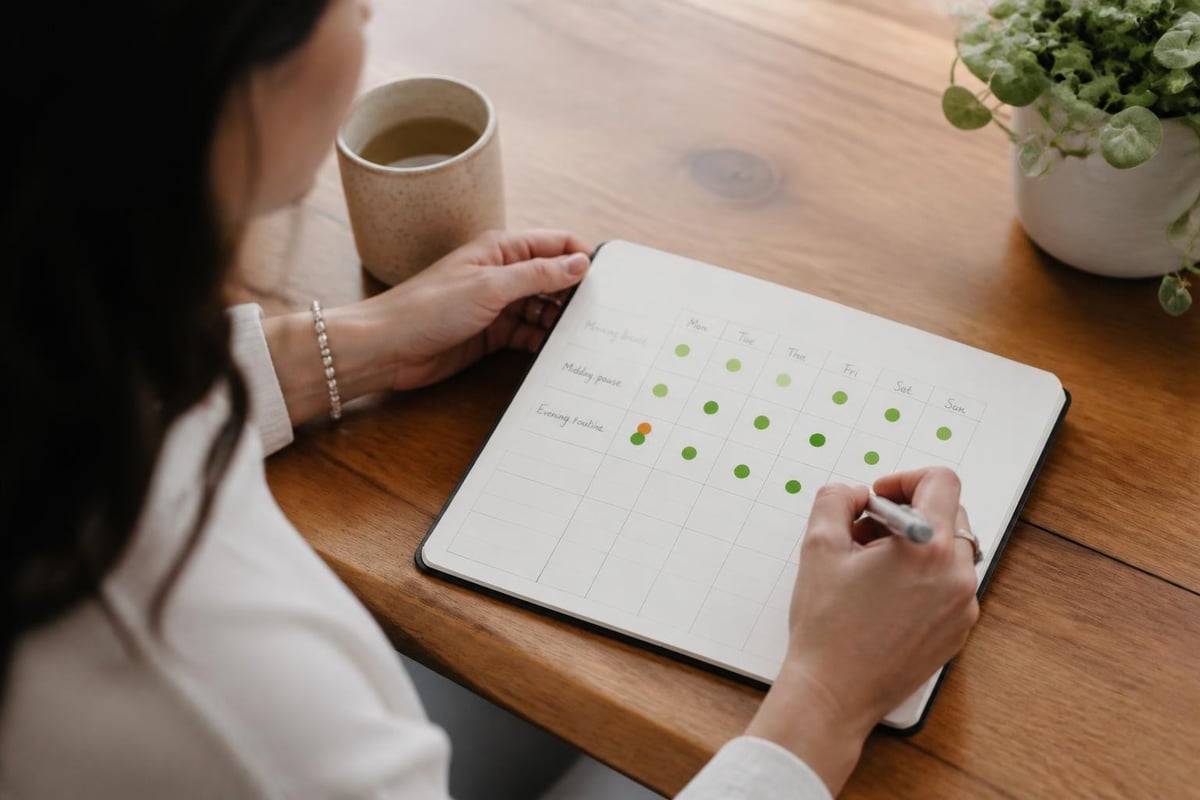
Keeping a simple record of your daily calm habits creates accountability without pressure. Use a basic checklist, calendar marks, or journal entries. The goal isn't perfection; it's awareness. If you miss a day, you simply notice it and begin again the next day.
This non-judgmental tracking reveals patterns over time. You might notice you skip your evening wind-down on Thursdays because of a standing commitment, prompting you to adjust timing or choose a different habit for that day.
Adapting Calm Habits to Life's Seasons
Your needs change throughout the year, during different life phases, and even across the menstrual cycle for those who experience it. Rigid adherence to any system eventually creates stress rather than relieving it. The most sustainable daily calm habits flex with your circumstances while maintaining their core essence.
Seasonal Adjustments
Winter might call for longer morning routines as you need more time to feel awake and alert. Summer evenings with extended daylight might shift your wind-down routine later. Simple daily habits aimed at cultivating calmness work best when they honor your body's natural rhythms rather than fighting against them.
High-Stress Periods
During particularly demanding times-project deadlines, family crises, health challenges-your daily calm habits become more important, not less. However, this isn't the time to maintain an elaborate routine. Strip down to the absolute essentials: three deep breaths morning and night, five minutes of movement, one moment of gratitude.
These minimal practices maintain your foundation without adding pressure during already overwhelming periods.
The Ripple Effect of Personal Calm
As you develop consistent daily calm habits, you'll notice changes that extend beyond your personal experience. The patience you cultivate through mindful breathing shows up in difficult conversations. The presence you practice during meals translates to deeper listening with loved ones. The boundary you set with evening screens creates space for connection and creativity.
Calm as Contagion
Nervous systems communicate with each other constantly. When you're regulated and calm, the people around you unconsciously begin to match that state. Your daily calm habits don't just change your internal experience; they shift the entire atmosphere of your home, workplace, and relationships.
This isn't about performing calmness or suppressing authentic emotions. It's about building genuine resilience that allows you to remain grounded even when you're angry, sad, or frustrated. You can feel the full range of human emotion without being overwhelmed by it.
Beyond Individual Wellness
In a culture that glorifies busyness and treats rest as laziness, maintaining daily calm habits is a quiet act of resistance. You're declaring that your nervous system deserves care, that presence matters more than productivity, and that sustainable living requires regular replenishment.
For more insights on how rest functions as a skill to be developed, visit rest is a skill to understand the deeper dimensions of this practice.
Troubleshooting Common Obstacles
Even with the best intentions, obstacles will arise. Recognizing common challenges and having strategies ready prevents temporary setbacks from becoming permanent abandonment of your practice.
"I Don't Have Time"
This is the most common objection, and it's worth examining closely. Daily calm habits don't require finding extra time; they're about using existing time differently. You're already breathing all day-can you make five of those breaths conscious? You're already eating lunch-can you put your phone away during it?
Time-neutral daily calm habits:
- Conscious breathing while commuting
- Phone-free meals you're already eating
- Stretching while water boils or coffee brews
- Gratitude reflection while brushing teeth
- Silence instead of podcast during morning shower
"I Keep Forgetting"
Remembering new behaviors requires external cues until they become automatic. Place physical reminders in your environment: a sticky note on your bathroom mirror, your journal on your pillow, your walking shoes by the door. Set phone alarms with specific prompts: "Time to breathe," "Pause and reset," "Screen sunset."
"It Doesn't Feel Like It's Working"
The effects of daily calm habits are often subtle at first. You might not feel dramatically different after a week or even a month. The changes show up as what doesn't happen: the argument you didn't escalate, the panic you didn't spiral into, the exhaustion you didn't accumulate.
Keep a simple journal noting your stress levels, sleep quality, and emotional resilience. After 30 days, review your entries. The patterns typically reveal progress that day-to-day experience obscures.
Creating Your Personal Calm Architecture
No two people need identical daily calm habits. Your optimal routine depends on your personality, schedule, challenges, and preferences. The goal is creating a personal architecture of calm that supports your specific nervous system and lifestyle.
Experiment and Observe
Treat the first month as a research phase. Try different practices, timings, and combinations. Notice what genuinely helps you feel more grounded versus what you think should help based on what works for others. Your body will tell you what it needs if you pay attention.
Some people find morning meditation transformative; others feel more benefit from evening journaling. Some need vigorous movement to discharge stress; others require gentle stretching. Honor your unique responses rather than forcing yourself into someone else's formula.
The Minimum Viable Calm Routine
If you could only maintain three daily calm habits, what would they be? Identifying your non-negotiables creates a foundation you can return to during chaotic periods. These might be:
- Five conscious breaths before getting out of bed
- A 10-minute midday walk
- Phone off 30 minutes before sleep
Everything else becomes extra rather than essential, reducing the pressure and increasing sustainability.
For those struggling with a racing mind, establishing these core practices provides an anchor when thoughts feel overwhelming.
The Long Game of Daily Calm
Building daily calm habits isn't a quick fix or a 30-day challenge that ends with dramatic before-and-after photos. It's a lifelong practice of tending to your nervous system with the same care you give to brushing your teeth or eating meals. Some days the practice feels effortless and nourishing. Other days it feels like going through motions. Both are part of the process.
The 10 daily habits that foster inner peace and calm, such as starting the day in silence and practicing gratitude, work precisely because they're repeated consistently over time, not because any single instance is magical.
What matters is showing up again and again, imperfectly, with whatever capacity you have available that day. The cumulative effect of this showing up is a life that feels fundamentally different: steadier, more spacious, more resilient, more yours.
Consider exploring anxiety relief tips alongside your daily calm habits to create a comprehensive approach to nervous system support. The practices reinforce each other, creating multiple pathways to peace.
Remember that even small habits can quiet the chaos of daily life when practiced with intention and consistency. The power lies not in the size of the action but in the regularity of the commitment.
Daily calm habits transform ordinary moments into opportunities for nervous system regulation, creating a foundation of peace that sustains you through life's inevitable challenges. The practices outlined here offer multiple entry points, allowing you to start exactly where you are and build gradually toward greater resilience and presence. My Calm Reset provides the daily support, simple routines, and downloadable resources you need to establish and maintain these habits, helping you feel more balanced, grounded, and at peace in your everyday life.
Get the free Mini Reset
A short sample of the 7-day guide — a gentle practice you can try today. Enter your email and the download link appears instantly.
Free. No spam. Unsubscribe anytime.
Want more calm in your life?
The Calm Reset guide is a 48-page digital book of rituals, prompts, and practices for a calmer life.
Get the Guide