Printable Self Care Guide: Build Your Daily Reset
A printable self care guide transforms abstract wellness intentions into tangible, actionable steps you can follow every day. In 2026, as digital fatigue grows and screen time continues to climb, more people are rediscovering the power of physical worksheets, journals, and printed resources that keep self-care visible and accessible. Unlike apps that demand notifications and battery life, a printed guide sits quietly on your desk or nightstand, ready when you need it most. This approach combines the convenience of downloadable resources with the mindful practice of writing by hand, creating a powerful tool for building sustainable wellness habits.
Why a Printable Self Care Guide Works
Physical materials create psychological anchoring that digital tools often lack. When you print a self-care worksheet and write on it with a pen, you engage different cognitive pathways than typing on a screen. Research from the American Psychological Association confirms that handwriting enhances memory retention and emotional processing, both essential for meaningful self-care practice.
A printable format offers several distinct advantages:
- No battery required – your guide remains accessible during power outages, travel, or screen-free evenings
- Tactile engagement – the physical act of checking boxes and writing notes strengthens commitment
- Visual presence – a printed sheet on your refrigerator or mirror serves as a constant reminder
- Privacy – no data tracking, no cloud storage concerns, just personal reflection
- Customization – you can highlight, annotate, and modify pages to fit your evolving needs
The best printable self care guide adapts to your lifestyle rather than forcing you into rigid templates. Whether you're establishing a calm morning routine or developing better evening wind down practices, having a physical reference point keeps you accountable without the pressure of digital perfectionism.
Essential Components to Include
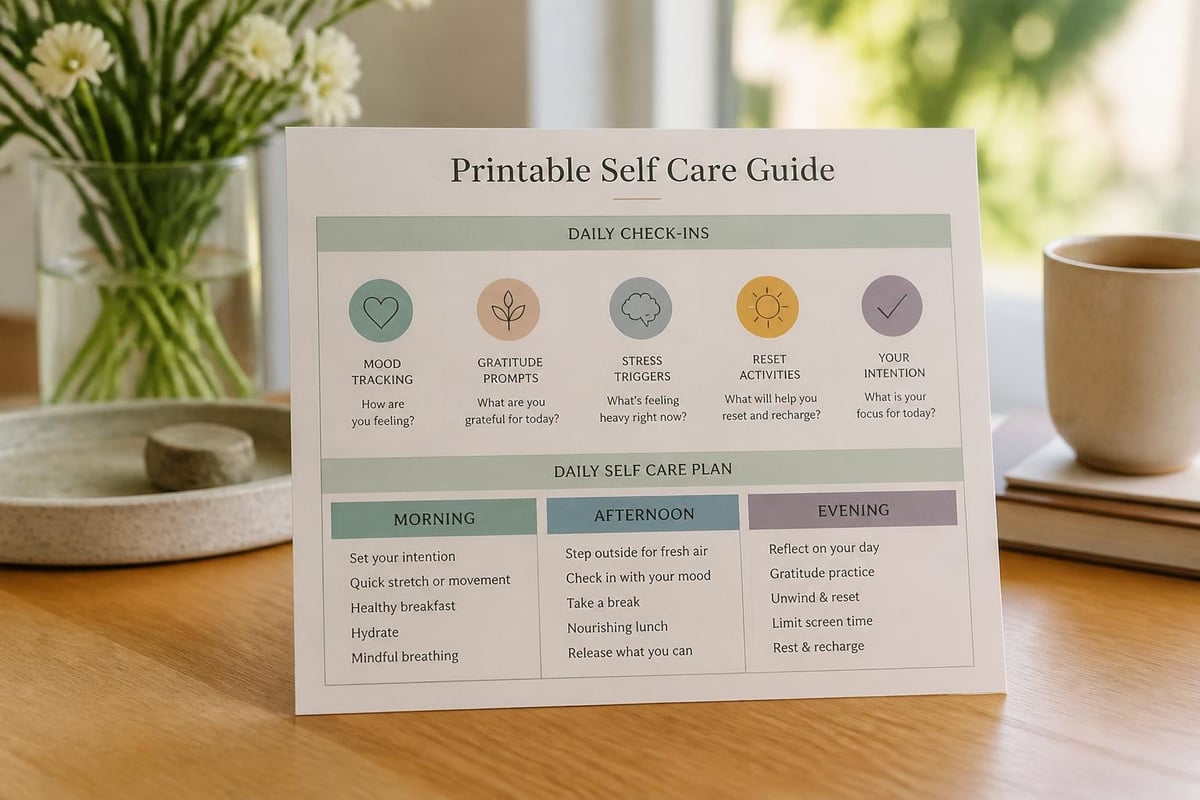
Creating an effective printable self care guide requires thoughtful structure. Start by identifying which elements will serve your daily needs most consistently. The WHO clinical guideline on self‑care interventions emphasizes that sustainable self-care practices integrate seamlessly into existing routines rather than demanding entirely new behaviors.
Daily Check-In Section
Begin each page with a brief morning assessment. This section should include:
- Date and day of the week – tracking patterns across time reveals insights
- Sleep quality rating – a simple 1-10 scale helps identify rest patterns
- Energy level – morning energy predicts afternoon needs
- Mood snapshot – one or two words capture emotional starting points
- Top priority – identifying what matters most focuses your day
This check-in takes less than two minutes but establishes mindful awareness that carries through your entire day. When you review past weeks, patterns emerge that reveal which habits support you and which drain your reserves.
Mindfulness and Grounding Practices
Your printable self care guide should dedicate space to calming techniques you can access quickly. Include a dedicated section with:
- Five-minute breathing exercises with simple step-by-step instructions
- Grounding techniques such as the 5-4-3-2-1 sensory method
- Body scan prompts for releasing physical tension
- Affirmation spaces where you can write personalized statements
These practices align with simple mindfulness practices that don't require apps, subscriptions, or special equipment. When stress rises unexpectedly, having these techniques printed and accessible makes them exponentially more likely to be used.
Stress and Trigger Tracking
Understanding what depletes your calm helps you make proactive choices. Create a tracking table that looks like this:
| Time | Trigger/Stressor | Physical Sensation | Response | Effectiveness |
|---|---|---|---|---|
| 9:30 AM | Work email | Tight chest | Deep breathing | 7/10 |
| 2:00 PM | Deadline pressure | Tension headache | Short walk | 8/10 |
| 6:00 PM | News scrolling | Restlessness | Turned off phone | 9/10 |
This format helps you identify patterns and measure which coping strategies actually work. The American Psychological Association's stress management tips recommend this type of systematic tracking as a foundation for developing personalized resilience strategies.
Building Your Personal Self-Care Menu
The most powerful printable self care guide includes a comprehensive menu of activities categorized by time investment and energy requirement. Not every self-care practice demands an hour of yoga or a spa day. Sometimes the most restorative action takes five minutes.
Quick Reset Activities (5-10 Minutes)
These micro-practices fit into busy schedules and provide immediate relief:
- Drink a full glass of water mindfully
- Step outside for fresh air and sunlight
- Write three things you're grateful for today
- Stretch major muscle groups at your desk
- Listen to one favorite song with full attention
- Send a kind text to someone you care about
Print this list and keep it visible. When you're struggling to find time for self-care, these quick options eliminate the barrier of lengthy commitments while still delivering meaningful benefits.
Moderate Activities (15-30 Minutes)
When you have slightly more time, these practices offer deeper restoration:
- Take a mindful walk without your phone or earbuds
- Prepare a nourishing meal focusing on each step of the process
- Journal about your day, emotions, or dreams
- Practice gentle yoga or stretching sequences
- Read a chapter of an uplifting book
- Call a friend or family member for genuine connection
Including time estimates on your printable guide removes decision fatigue. You know exactly which activity fits the available window.

Extended Practices (45+ Minutes)
Reserve these for weekends or dedicated self-care blocks:
- Take a bath with Epsom salts and calming music
- Engage in a hobby that brings you joy
- Attend a class (fitness, art, cooking)
- Spend time in nature hiking or exploring
- Have a leisurely meal with loved ones
- Create something (art, writing, crafts, music)
By categorizing activities this way, your printable self care guide becomes a practical tool rather than an aspirational document gathering dust. You can match the activity to your available time and current energy level.
Customizing Your Guide for Different Life Seasons
Life circumstances change, and your self-care needs evolve accordingly. A effective printable self care guide adapts to different seasons of life rather than imposing one-size-fits-all solutions. Consider creating specialized versions for:
High-Stress Periods: When deadlines loom or life feels overwhelming, your guide should emphasize techniques for reducing overwhelm and maintaining basic functioning. Focus on sleep hygiene, nutrition basics, and brief stress-relief practices that prevent complete burnout.
Recovery Phases: After illness, grief, or major life transitions, self-care shifts toward gentle restoration. Your printable guide might include permission statements ("It's okay to rest"), simplified routines, and connection prompts that prevent isolation during vulnerable times.
Growth Seasons: When life feels stable and you're ready to expand, use your guide to track new habits, learning goals, and creative projects. This version supports exploration rather than just maintenance.
The downloadable guides at My Calm Reset offer templates you can customize for exactly where you are right now, ensuring your self-care practices remain relevant and supportive through every life chapter.

Weekly and Monthly Review Sections
Reflection transforms isolated actions into coherent practice. Your printable self care guide should include dedicated review pages that help you assess patterns and adjust strategies.
Weekly Reflection Prompts
Every Sunday (or your chosen review day), spend ten minutes completing these prompts:
- What self-care practice served me most this week?
- Which planned activities did I skip, and why?
- What unexpected stressor appeared, and how did I respond?
- What do I need more of next week?
- What can I release or delegate?
These questions foster self-compassion rather than self-criticism. The goal isn't perfection but rather honest awareness of what's working and what needs adjustment.
Monthly Pattern Analysis
Create a simple table for monthly tracking:
| Self-Care Category | Weekly Average | Trend | Notes |
|---|---|---|---|
| Physical activity | 4 days | Improving | Morning walks feel sustainable |
| Creative time | 2 days | Stable | Need to protect weekend mornings |
| Social connection | 3 days | Declining | Schedule regular coffee dates |
| Restorative rest | 5 days | Strong | Evening routine is working |
This overview reveals long-term trends that weekly check-ins might miss. You might notice that winter months require different self-care strategies than summer, or that certain life events consistently disrupt your routines in predictable ways.
Integrating Evidence-Based Practices
While personal preference guides much of self-care, grounding your printable self care guide in evidence-based practices ensures you're investing time in strategies that actually work. The WHO communications toolkit on self-care interventions provides ready-to-use messaging based on global health research.
Sleep Hygiene Checklist
Quality sleep forms the foundation of all other self-care. Include a daily sleep preparation checklist:
- Bedroom temperature between 60-67°F
- No screens 30 minutes before bed
- Same bedtime within 30-minute window
- Caffeine cutoff by 2:00 PM
- Brief gratitude or reflection practice
Research on sleep and stress relief consistently shows that these simple practices dramatically improve sleep quality, which cascades into better mood, energy, and stress resilience throughout the day.
Nutrition and Hydration Tracking
You don't need to count calories or follow restrictive diets. Instead, your guide should help you notice patterns:
- Did I eat breakfast within two hours of waking?
- How many servings of vegetables today?
- Water intake (mark glasses or bottles consumed)
- Did I eat while distracted or mindfully?
- How do I feel two hours after meals?
This awareness-based approach supports intuitive eating and helps you identify which foods truly nourish you versus which create energy crashes or digestive discomfort.
Movement and Physical Activity
Physical self-care extends beyond formal exercise. Track diverse movement throughout your day:
- Intentional exercise sessions
- Active transportation (walking, biking)
- Stretching or mobility work
- Playful movement (dancing, sports, games)
- Restorative practices (gentle yoga, tai chi)
This broader definition helps you recognize all the ways you care for your physical body, making it easier to meet movement needs even during busy weeks when gym sessions don't happen.
Crisis Support and Safety Planning
A comprehensive printable self care guide acknowledges that some days challenge our coping capacity. Including a safety plan section ensures you have clear steps during acute distress. The SAMHSA safety plan resources offer downloadable templates you can incorporate.
Your safety plan page should include:
- Warning signs that your mental health is declining
- Internal coping strategies you can use alone
- People and social settings that provide distraction
- Emergency contacts (friends, family, therapist, crisis lines)
- Professional resources (doctor, counselor, crisis services)
- Environment safety steps to take if needed
This section isn't about daily use, but its presence provides security. You've thought through crisis response during calm moments, which makes those strategies accessible when distress clouds clear thinking.
Design and Layout Considerations
The visual design of your printable self care guide significantly impacts whether you'll actually use it. Cluttered, overwhelming layouts get abandoned while clean, intuitive designs become daily companions.
White Space Matters
Resist the urge to cram every inch with text or checkboxes. Generous white space creates visual calm and makes the guide feel approachable rather than demanding. Each section should breathe.
Font Size and Readability
Choose legible fonts sized between 11-14 points for body text. Headers should clearly distinguish sections without overwhelming. If you're creating guides for others, consider accessibility needs including high-contrast options and larger text versions.
Color Coding Systems
Use subtle color coding to organize different self-care categories:
- Blue for physical health practices
- Green for emotional wellness activities
- Purple for spiritual or meaning-making practices
- Orange for creative and joyful pursuits
- Gray for administrative self-care (boundaries, organization)
This visual system helps you quickly assess whether you're balancing different dimensions of wellbeing or overemphasizing one area while neglecting others.
Practical Printing and Storage Tips
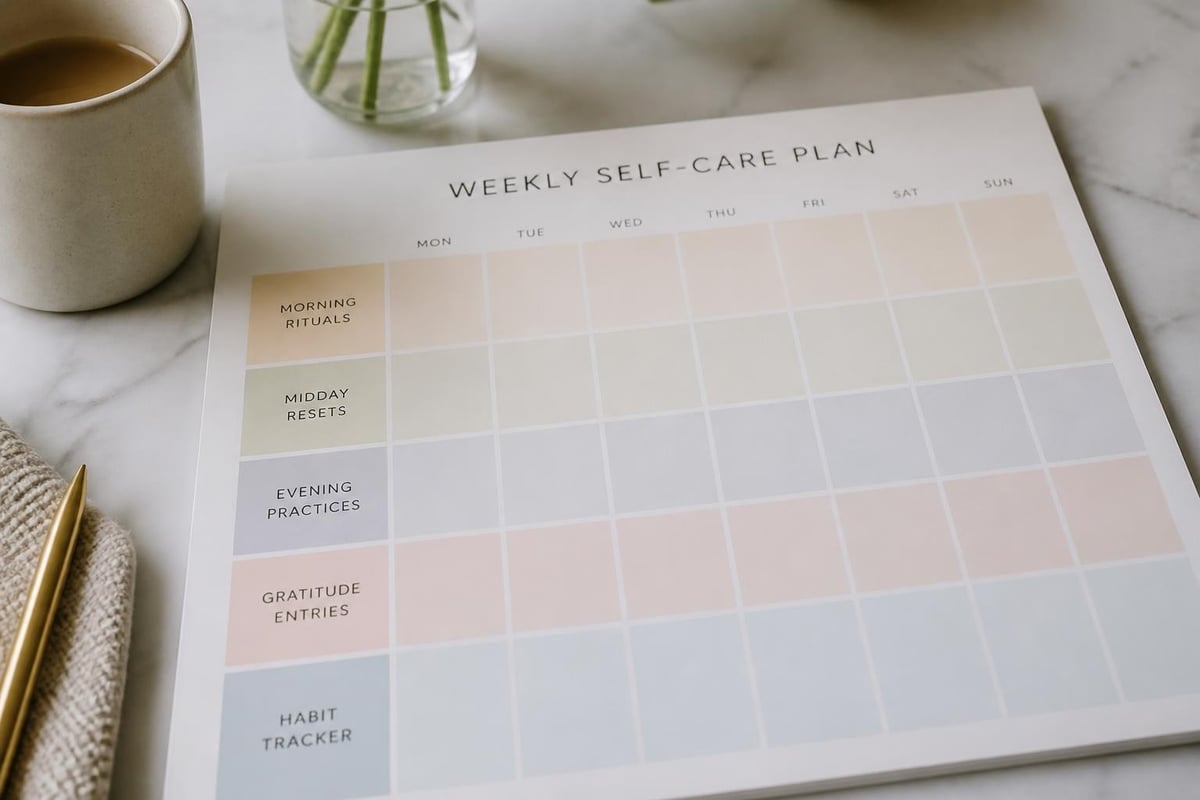
Creating your printable self care guide is only the first step. Making it physically accessible and protected ensures long-term use.
Printing Recommendations
- Paper weight: Use 24-32 lb paper for durability
- Binding options: Three-hole punch for binders, or spiral binding for lay-flat use
- Print quality: Standard resolution works fine; save high-quality for special elements
- Double-sided printing: Saves paper but ensure text doesn't show through
Organization Systems
Different people need different storage approaches:
Binder method: Use dividers for categories (daily, weekly, monthly, resources). This allows adding and removing pages easily and keeps everything in one place.
Clipboard system: Keep current week's pages on a clipboard that moves with you (kitchen counter, desk, bedside table). Archive completed weeks in a folder.
Planner integration: Hole-punch your self-care pages to fit existing planners, integrating wellness with scheduling and tasks.
Digital backup: Photograph completed pages before filing. This creates a searchable archive while maintaining the benefits of handwritten practice.
Seasonal Updates and Refinement
Your printable self care guide should evolve as you do. Plan to review and update your templates quarterly, adjusting for:
- Seasonal changes that affect energy, mood, and available activities
- Life transitions requiring new coping strategies or support systems
- Discovered preferences as you learn which practices truly serve you
- Changing circumstances in work, relationships, or health needs
This iterative approach treats self-care as a dynamic practice rather than a static prescription. What worked beautifully in January might need modification by June, and that's not failure but rather responsive self-knowledge.
Many people find that maintaining a daily wellness routine becomes easier when their printable materials reflect current realities rather than outdated assumptions about what they "should" be doing.
Sharing and Community Aspects
While self-care is inherently personal, sharing certain aspects can strengthen accountability and inspiration. Consider these community-oriented additions to your printable self care guide:
Accountability Partner Check-Ins
Include a monthly page where you and a friend both track chosen practices and exchange completed sheets. Seeing someone else's honest struggles and successes normalizes the imperfection of real life.
Family Self-Care Coordination
If you live with others, create a household self-care calendar that honors everyone's needs. This prevents scheduling conflicts and models healthy boundaries for children or partners learning to prioritize their own wellbeing.
Group Challenge Tracking
Join or create a monthly self-care challenge with friends. Your printable guide includes that month's specific practice (daily gratitude, movement streak, screen-free evenings) with space to note daily completion and observations.
These shared elements work best when they add gentle support rather than competitive pressure. The goal is mutual encouragement, not comparison or judgment.
A well-designed printable self care guide transforms abstract wellness intentions into concrete daily practices that actually fit your real life. By combining evidence-based strategies with personalized preferences, creating space for both quick resets and deeper restoration, and regularly reviewing what's working, you build sustainable self-care that evolves with your changing needs. My Calm Reset offers thoughtfully designed downloadable guides and ongoing resources to help you create simple routines that restore balance and peace in everyday life, one printed page at a time.
Want more calm in your life?
The Calm Reset guide is a 48-page digital book of rituals, prompts, and practices for a calmer life.
Get the Guide